
At the Iran-Belgium FIFA World Cup match, least one attendee wearing a pre-revolutionary flag shirt was detained for trying to run onto the pitch and Iranian player Alireza Jahanbakhsh said after the match that he doesn't want to keep focusing on the challenging situations faced by his team.

'Actual implementation of the 14-point agreement is proving hard to achieve let alone striking and sustaining a long-term treaty or deal.'

US President Donald Trump has lauded India as an 'essential partner' and 'trusted ally' in addressing regional challenges, particularly its 'big role' in West Asia peace efforts, following discussions with Prime Minister Narendra Modi at the G7 Summit.

US President Donald Trump announced that a peace deal with Iran, which includes a commitment from Iran to abandon nuclear weapons, is nearly complete and expected to be signed in Europe this weekend. This development follows Trump's decision to call off military strikes against Iran hours after threatening to take control of its oil industry.

Ten-man Belgium dominated possession but could not break down a disciplined Iranian defence, with goalkeeper Alireza Beiranvand producing a string of saves to preserve the result in the Group G encounter.

The US forces conducted strikes against Iran, on Friday, as a powerful response to Thursday's attack on a commercial ship that was transiting the Strait of Hormuz, said Central Command (CENTCOM) in a statement.

The United States and Iran are scheduled to hold their initial round of talks in Switzerland on Friday, following a ceasefire agreement virtually signed by US President Donald Trump and Iranian President Masoud Pezeshkian.
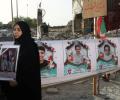
The United States and Iran are engaged in indirect talks aimed at developing a framework for a possible agreement, according to Iran's ISNA News Agency. Intensive mediation efforts are underway, but it remains uncertain whether a final agreement is within reach.

As the negotiations continued, the Iranian government said on social media that "talks between Iran and the US in Islamabad entered the expert-level stage as economic, military, legal, and nuclear committees joined in".
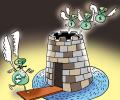
Foreign Portfolio Investors (FPIs) have withdrawn over Rs 62,853 crore from Indian equities in the first fortnight of June, bringing the total outflows for 2026 to Rs 2.87 lakh crore, surpassing the entire 2025 figure, driven by geopolitical tensions, global economic growth concerns, and a weakening rupee.

US Central Command (CENTCOM) forces conducted additional strikes against multiple targets in Iran, on Saturday (local time), at the commander in chief, US President Donald Trump's direction.

India has welcomed the ceasefire between the US and Iran, advocating for de-escalation, dialogue, and diplomacy to secure lasting peace in West Asia.

A peace deal between the US and Iran, set to be signed in Geneva, faces significant hurdles over the release of Iran's USD 12 billion in frozen assets, with conflicting reports from both sides on the conditions for their release.

Indian benchmark indices Sensex and Nifty rallied in early trade, driven by a positive trend in global markets, cooling crude oil prices following a US-Iran peace deal, and fresh foreign fund inflows.

Indian benchmark indices Sensex and Nifty recovered early losses to trade higher, supported by encouraging developments on the geopolitical front, specifically the US-Iran peace deal, and easing crude oil prices.

US Secretary of State Marco Rubio stated that significant progress has been made in negotiations with Iran to reopen the Strait of Hormuz, a critical global shipping lane. However, President Donald Trump remains cautious, vowing not to accept a 'bad deal' regarding Iran's nuclear programme and regional stability.

Iran has announced the reinstatement of strict military control over the Strait of Hormuz, citing US violations of previous agreements regarding maritime passage. This decision follows claims of continued American blockade of Iranian ports and a statement from former US President Trump regarding the persistence of the naval blockade until a comprehensive peace agreement is reached.

Indian benchmark indices, Sensex and Nifty, rallied significantly following a sharp decline in crude oil prices. This decline was triggered by US President Donald Trump's announcement of progress in negotiations with Iran towards a peace agreement, which led to renewed optimism in global markets.

Iranian President Masoud Pezeshkian has confirmed Tehran's participation in Pakistan-facilitated peace talks with the US in Islamabad, according to Prime Minister Shehbaz Sharif. This development follows a conditional ceasefire agreement and aims to address regional tensions.

Pakistan has increased security measures in Islamabad and surrounding areas as the US and Iran prepare for another round of peace talks. The move follows an announcement by former US President Donald Trump that American negotiators would be in Pakistan for discussions aimed at resolving the conflict between the two nations.

Hours after warning that the United States could strike Iran "very hard tonight", President Donald Trump announced to halt planned military action, despite earlier threats to target Kharg Island and other key Iranian oil facilities.

Much will depend on how the protagonists use the current interlude to work proactively for the beginning of a durable settlement or, on the contrary, prepare for a new round of escalation, points out Ambassador M K Bhadrakumar.

China's week-long mediation between Pakistan and Afghanistan concludes without a formal agreement, though Beijing claims progress in exploring solutions to resolve their differences.

US President Donald Trump on Thursday announced that Israel and Lebanon have reached an agreement to initiate a 10-day ceasefire, following intensified diplomatic efforts to reduce hostilities in the region.

The Indian rupee depreciated by 34 paise to close at 93.78 against the US dollar, marking its third consecutive session of decline. This fall is attributed to escalating crude oil prices driven by uncertainty surrounding US-Iran peace talks and fresh attacks in the Strait of Hormuz, alongside significant foreign institutional investor outflows from domestic equity markets.

Uncertainty surrounds the planned second round of peace talks between the US and Iran in Islamabad, as both sides engage in brinkmanship. Despite Pakistan's security preparations, Iran has yet to confirm its attendance, citing a lack of seriousness from the US in pursuing diplomacy and violations of the ceasefire.

The United States military has intercepted and destroyed two Iranian attack drones that posed an immediate hazard to commercial shipping lanes in the Strait of Hormuz, according to an official statement by the US Central Command late Saturday.

The US military carried out 'self-defence strikes' targeting Iranian missile launch sites and boats near the Strait of Hormuz, even as President Trump announced progress in ceasefire negotiations, stating Iran's enriched uranium will be 'turned over' or destroyed.

Prime Minister Narendra Modi urged US President Donald Trump to prioritise the safety of Indian seafarers in the Strait of Hormuz during the implementation of Washington's proposed Iran peace deal, as both leaders focused on repairing strained bilateral relations at the G7 summit.

A Pakistani delegation, led by Army Chief Field Marshal Asim Munir, has arrived in Tehran to mediate the ongoing conflict between the US and Iran, following initial talks in Islamabad.

US Vice President JD Vance on Friday dismissed reports suggesting that Iran would receive financial incentives merely for signing the peace deal between Washington and Tehran aimed at ending the hostilities in West Asia, calling such claims "fake information".

Iranian President Masoud Pezeshkian is on a state visit to Pakistan to discuss the full implementation of an agreement signed between Iran and the US, alongside regional and international developments. The visit also aims to strengthen bilateral cooperation across various sectors, following recent high-level talks between the US and Iran in Switzerland regarding regional security.

US Special Envoy Steve Witkoff and Iranian Foreign Minister Abbas Araghchi are reportedly heading to Switzerland for a new round of US-Iran negotiations, following a recently announced memorandum of understanding to end hostilities in West Asia and a ceasefire between Israel and Hezbollah.

National Security Adviser Ajit Doval held "constructive" talks with Chinese Foreign Minister Wang Yi in New Delhi, focusing on the normalisation of bilateral ties. The discussions reviewed recent developments and progress towards rebuilding trust after the eastern Ladakh border standoff. Both sides have implemented measures, including disengagement pacts and high-level meetings, to improve relations.

Iran's Ambassador to Pakistan, Reza Amiri Moghadam, has said there are no ongoing talks between Tehran and Washington, DC, countering United States President Donald Trump's claims of peace overtures.

As Tehran and Washington continue with their engagements following the signing of the MoU earlier this month, sources have told Al Arabiya that the two are set to hold the next round of negotiations in Switzerland on June 28 and 29.

India and Canada solidify their partnership with a landmark uranium supply agreement and discussions to finalise a comprehensive economic partnership, signaling stronger ties and cooperation on key global issues.

Analysts predict that inflation data, the US Federal Reserve's interest rate decision, and crude oil price trends will be the primary factors influencing the movement of Indian stock markets. Geopolitical developments, particularly the US-Iran deal, and foreign investor activity will also play a crucial role.

US Secretary of State Marco Rubio said that discussions aimed at halting the conflict with Iran have shown "some slight progress," while simultaneously echoing Washington's dissatisfaction with its NATO allies.
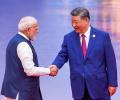
India's dual pursuit of a robust strategic partnership with Washington and a pragmatic, tension-management policy with Beijing represents the essence of modern multi-alignment. By embracing economic pragmatism, learning to compartmentalize political differences, and engaging in continuous dialogue, India can secure its borders, grow its economy, and contribute to a stable, multipolar Asian century, points out Ambassador Rajasekhar.
